The scribe that never leaves the room.
An AI scribe that lives inside your clinic. Your phone listens to the visit, the PrivacyNote unit writes the draft note, and you sign it. No cloud, no internet needed, no company holding your patient's words.
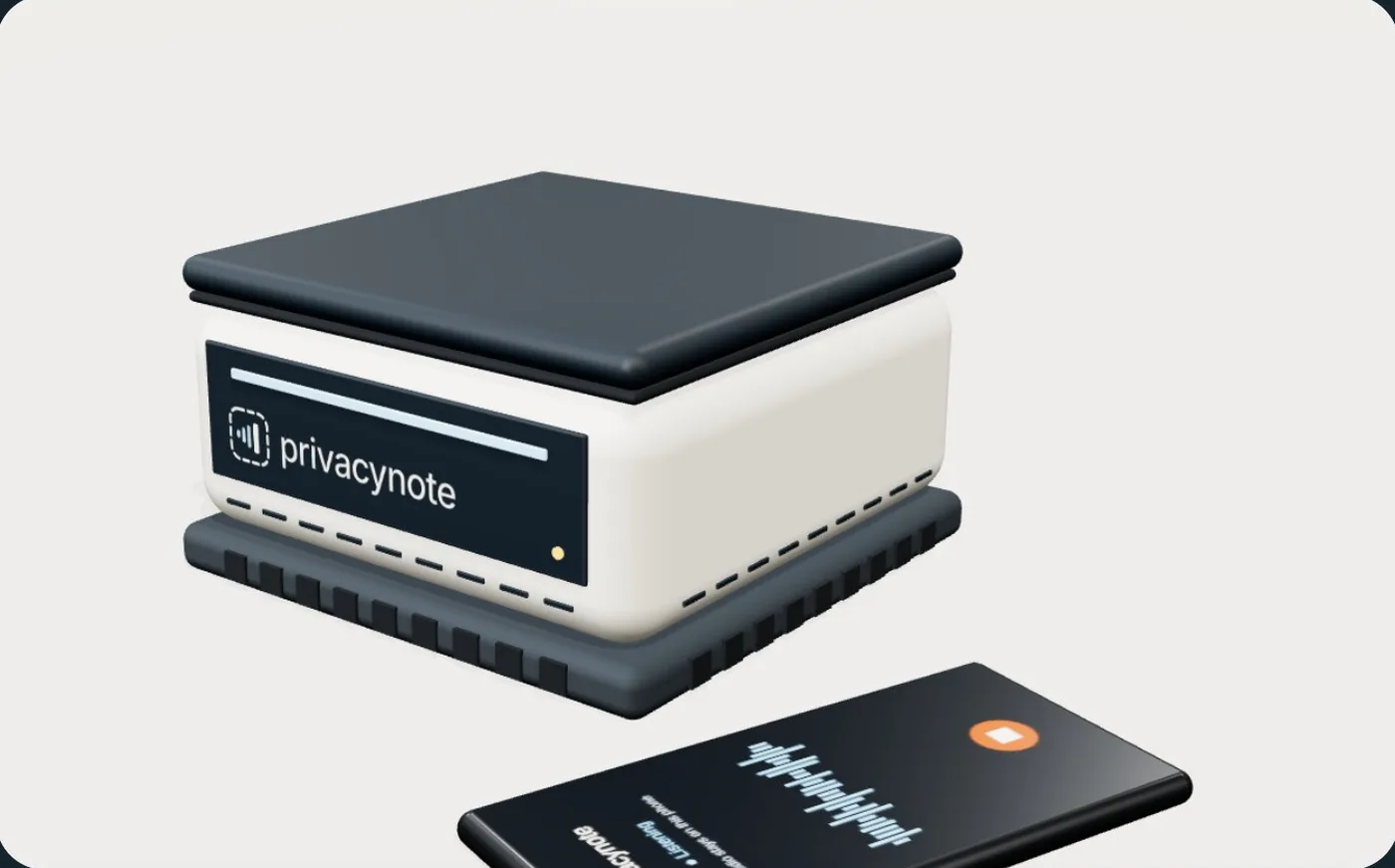
For clinics where the patient's words cannot go to a cloud.
Counseling and behavioral health · Substance use treatment · Community and immigrant-serving clinics · Anywhere the internet is not a given
The difference
Against what you can buy today
| Question | No scribe | Cloud scribe | PrivacyNote |
|---|---|---|---|
| Where the patient's words go | Nowhere | The vendor's cloud | Your clinic, never further |
| What the patient agrees to | Nothing | A company holds the recording and the transcript | Recorded on the clinician's phone, deleted after the note |
| Works with the internet down | Yes | No | Yes |
| Price | $0, plus your evenings | $0 to $180 | $1,800 once, or $150 a month on a 12-month agreement. Shared by your clinicians. |
Your EHR holds the note you wrote. A cloud scribe holds everything your patient said.
How it works
The phone listens, PrivacyNote writes, you sign
-
1 · Phone, in the room
Turns speech into text on the phone. Audio is deleted once it is text.
-
2 · PrivacyNote unit, on the shelf
Writes the draft from the text, inside your clinic, on an encrypted disk.
-
3 · Your browser
You read, fix, sign, and paste into your chart. An email with a link, no patient details in it.
What changes
The same Tuesday, with and without PrivacyNote
Today
- 8:00
- First patient. Twenty more to come.
- Between visits
- Five minutes at the keyboard for each note, or the note waits.
- 12:30
- Lunch over the chart, catching up on the morning.
- 5:30
- Last patient. Eleven notes still open.
- 7:40
- Last note signed, at the kitchen table.
About 100 minutes of typing. One in nine of them after hours.
With PrivacyNote
- 8:00
- Tap Start. “It is recorded on my phone and deleted after the note.” First patient.
- Between visits
- Tap Stop. The draft is waiting in the browser. Three minutes to read, fix, sign.
- 12:30
- Lunch. The morning is signed.
- 5:30
- Last patient. One draft open.
- 5:45
- Last note signed. Lights off.
About 60 minutes of checking, in the gaps you already have. The patient's words never left the room.
20 visits, 5 minutes a note today, 3 minutes to check a draft. The 3 is our assumption until the pilot measures it.
What it costs
One price. Then it is yours.
Year one costs what a cloud scribe costs. After that, nothing, unless you want support.
- One unit serves up to 5 clinicians.
- Support optional.
Who is building it
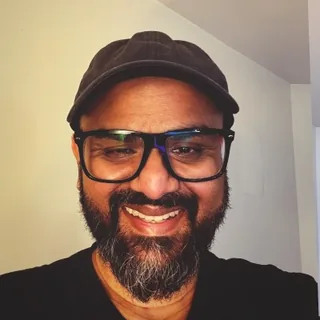
Vishnu Vettrivel
By day an engineering director at a large software company, where he led its ISO 42001 certification, the international standard for managing AI responsibly. In the evenings a doctoral researcher on evidence for regulated AI.
PrivacyNote is built the way a medical device is built: a written list of what could go wrong, a test for each, a clinician's review, and the source code, published before anyone buys.
The pilot
Take one of the first pilots.
One free unit, one clinician, a few weeks. If it does not earn its shelf space, we take it back. You keep your numbers and the evidence either way.
Questions
Plain answers
- Does it make a diagnosis or suggest codes?
- No. It writes a draft of what was said. You decide what goes in the chart.
- Does it work with my EHR?
- You paste the signed note. No EHR link yet.
- What languages?
- English today. Spanish and Tamil are on the roadmap.
- How fast is a draft?
- About half a minute on a laptop in our lab tests. The unit is being measured now.
- Do I need IT staff?
- No. A shelf and a power outlet.
- What is inside the unit?
- A small computer with an encrypted disk and its own Wi-Fi, in a printed PrivacyNote case. The software is open source.